
All About TVs

Today is the day we celebrate the switch from analog to digital television! It's Analog to Digital TV Day, and what better way to celebrate than to learn all about TVs!

History of Television Technology

The history of television is a fascinating one, and it all began with the invention of the mechanical TV.

Mechanical TV
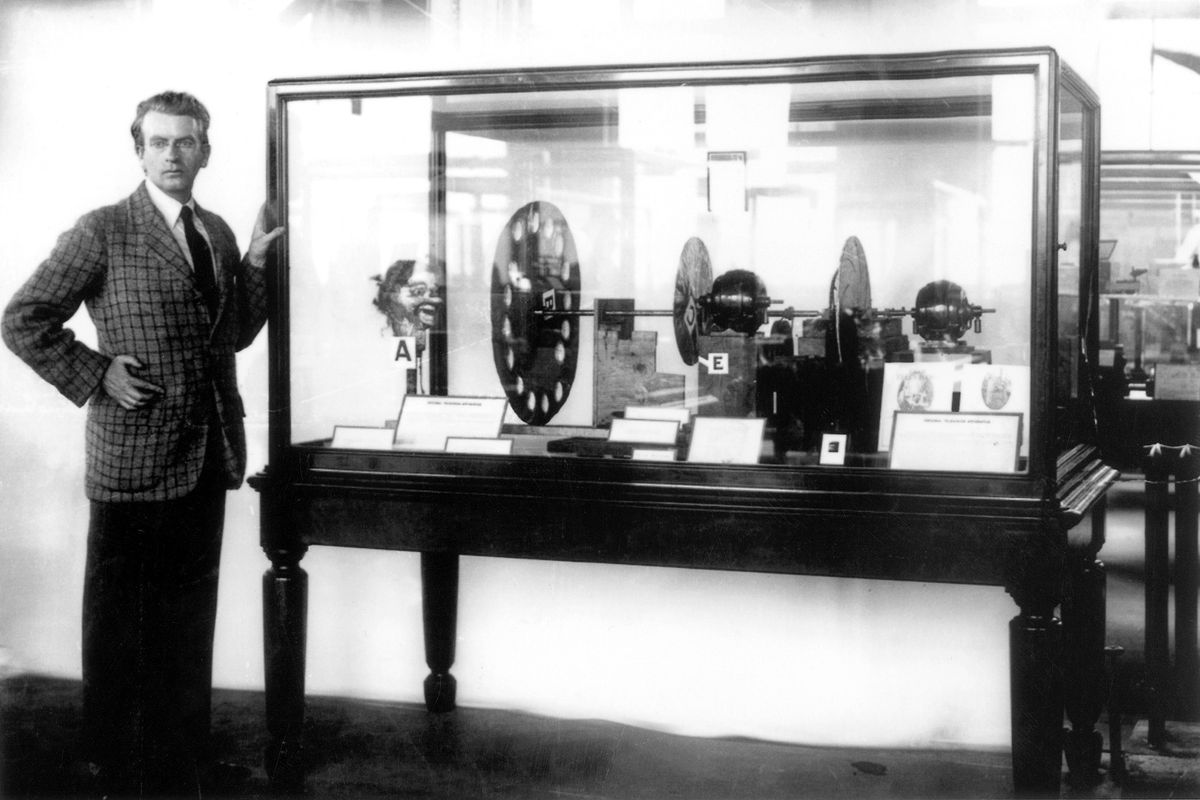
In the early 19th century, Alexander Bain developed a facsimile transmission system for still photographs, and Frederick Bakewell successfully demonstrated a working laboratory version in 1851.

Willoughby Smith discovered the photoconductivity of selenium in 1873, and it was Paul Julius Gottlieb Nipkow who proposed and patented the Nipkow Disk in 1884. This ingenious device was a spinning disk with a spiral pattern of holes that could scan a line of the image.

These early developments paved the way for modern television, but it wasn't until 1907 that Lee de Forest and Arthur Korn made the design practical with their advancements in amplification tube technology.

Electronic TV

After mechanical TVs, the world of television was changed forever when the Video Camera Tube (CRT) was invented. In 1897, English physicist J. J. Thomson was able to deflect cathode rays, a crucial component of the modern CRT. This invention was further developed by German physicist Ferdinand Braun and is also known as the "Braun" tube.

In 1906, Germans Max Dieckmann and Gustav Glage produced the first-ever raster images in a CRT. Then, in 1907, Russian scientist Boris Rosing used a CRT to form a picture from a video signal. This was the first time an image was displayed on a screen with a CRT.

Color TV

The invention of CRT paved the way for the development of color television. Ever since the invention of black-and-white televisions, scientists and inventors have been trying to find ways to create a color image from monochrome images. In 1880, Maurice Le Blanc proposed a color system for television and wrote about line and frame scanning for the first time. 

In 1897, Jan Szczepanik patented a color television system that used a selenium photoelectric cell at the transmitter and an electromagnet controlling an oscillating mirror and a moving prism at the receiver. However, his system lacked the ability to analyze the spectrum of colors at the transmitting end, rendering it useless. Hovannes Adamian also experimented with color television in 1907 and is credited with the earliest project of color television.

Digital TV

Fast forward to the late 20th century and we have the introduction of digital television (DTV). This revolutionary technology has changed the way we watch television as it allows for audio and video to be transmitted through digitally processed and multiplexed signals, a stark difference from the analog signals used in the past. Digital television supports more than one program in the same channel bandwidth due to data compression, making it a very efficient service. 

The early beginnings of digital television can be traced back to the development of high-performance computers, which made it possible for digital television to exist. The high bandwidth requirements of uncompressed digital video were too difficult to achieve, leading to the development of more efficient data compression methods. This allowed SDTV to operate with a mere 200 Mbit/s and HDTV to take up even less space with a 1 Gbit/s requirement. 

Today is the day we celebrate the switch from analog to digital television! It's Analog to Digital TV Day, and what better way to celebrate than to learn all about TVs!

History of Television Technology

The history of television is a fascinating one, and it all began with the invention of the mechanical TV.

Mechanical TV

In the early 19th century, Alexander Bain developed a facsimile transmission system for still photographs, and Frederick Bakewell successfully demonstrated a working laboratory version in 1851.

Willoughby Smith discovered the photoconductivity of selenium in 1873, and it was Paul Julius Gottlieb Nipkow who proposed and patented the Nipkow Disk in 1884. This ingenious device was a spinning disk with a spiral pattern of holes that could scan a line of the image.

These early developments paved the way for modern television, but it wasn't until 1907 that Lee de Forest and Arthur Korn made the design practical with their advancements in amplification tube technology.

Electronic TV

After mechanical TVs, the world of television was changed forever when the Video Camera Tube (CRT) was invented. In 1897, English physicist J. J. Thomson was able to deflect cathode rays, a crucial component of the modern CRT. This invention was further developed by German physicist Ferdinand Braun and is also known as the "Braun" tube.

In 1906, Germans Max Dieckmann and Gustav Glage produced the first-ever raster images in a CRT. Then, in 1907, Russian scientist Boris Rosing used a CRT to form a picture from a video signal. This was the first time an image was displayed on a screen with a CRT.

Color TV

The invention of CRT paved the way for the development of color television. Ever since the invention of black-and-white televisions, scientists and inventors have been trying to find ways to create a color image from monochrome images. In 1880, Maurice Le Blanc proposed a color system for television and wrote about line and frame scanning for the first time. 

In 1897, Jan Szczepanik patented a color television system that used a selenium photoelectric cell at the transmitter and an electromagnet controlling an oscillating mirror and a moving prism at the receiver. However, his system lacked the ability to analyze the spectrum of colors at the transmitting end, rendering it useless. Hovannes Adamian also experimented with color television in 1907 and is credited with the earliest project of color television.

Digital TV

Fast forward to the late 20th century and we have the introduction of digital television (DTV). This revolutionary technology has changed the way we watch television as it allows for audio and video to be transmitted through digitally processed and multiplexed signals, a stark difference from the analog signals used in the past. Digital television supports more than one program in the same channel bandwidth due to data compression, making it a very efficient service. 

The early beginnings of digital television can be traced back to the development of high-performance computers, which made it possible for digital television to exist. The high bandwidth requirements of uncompressed digital video were too difficult to achieve, leading to the development of more efficient data compression methods. This allowed SDTV to operate with a mere 200 Mbit/s and HDTV to take up even less space with a 1 Gbit/s requirement. 

Ready To Explore?

One Pass
That Does It All!